
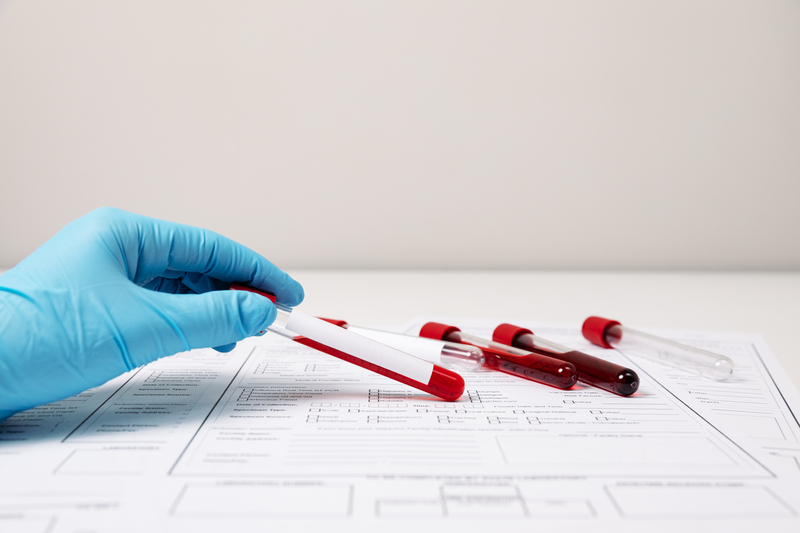
Coproculture
- What is a stool culture test?
- When is a stool culture recommended?
- How is a stool culture performed?
- Reference Values
- Interpretation of results: positive/negative stool culture
- Limitations and factors that may influence the results
- Fecal culture in conjunction with other tests
- Frequently Asked Questions
- The Benefits of Tests Performed at the Elytis Laboratory
Fecal culture (bacteriological culture of fecal matter) is a laboratory test that identifies and isolates pathogenic bacteria from stool. Its primary purpose is to detect microbial agents responsible for infectious diarrhea, enterocolitis, or other gastrointestinal infections and, if necessary, to determine their sensitivity to antibiotics (antibiogram).
Stool culture is essential for diagnosing bacterial causes of acute or chronic diarrhea, investigating foodborne illnesses, and monitoring response to treatment. The results provide useful information to help the physician decide whether antimicrobial therapy is necessary and which treatment options are most effective.
What is a stool culture test?
Fecal culture is the process by which a stool sample is inoculated onto selective and differential culture media, incubated, and examined for bacterial growth. After the suspected microorganisms are isolated, they are identified (using biochemical, immunological, or automated methods) and, as a rule, tested for antibiotic susceptibility (antibiogram).
What it can detect:
- Common bacteria responsible for diarrhea: Salmonella spp., Shigella spp., Campylobacter spp., Yersinia enterocolitica, Escherichia coli (enteropathogenic/enterotoxigenic strains), etc.
- Other bacteria relevant in specific contexts (e.g., Plesiomonas, Aeromonas)
- Depending on the laboratory and the indication, a stool culture may supplement microscopic examination and tests for bacterial toxins (e.g., Clostridioides difficile toxins).
A stool culture does not detect viruses (e.g., rotavirus, norovirus) or parasites (specific tests are used for these: stool parasite examination, antigen/parasite/PCR).
When is a stool culture recommended?
A stool culture is indicated in the following situations:
- Severe acute diarrhea (especially with blood, fever >38.5°C, dehydration)
- Persistent diarrhea (>48–72 hours) or recurrent diarrhea
- Diarrhea in young children, the elderly, or immunocompromised patients (increased risk of complications)
- Suspected foodborne illness outbreaks (restaurants, cafeterias, institutional settings)
- Cases associated with travel to endemic countries
- Assessment of treatment failure following empirical therapy or prior to initiating antibiotic therapy in cases of complications
- When specific infections are suspected (e.g., Campylobacter, Yersinia) and the test result influences the treatment decision
The doctor decides whether to order a stool culture based on the patient's symptoms, clinical examination, and the severity of the illness.
How is a stool culture performed?
Sample Collection
- Sterile container — use the container with a lid and follow the instructions provided by the laboratory.
- Amount — a small amount (approx. 5–10 g) is sufficient; avoid contamination with urine or toilet water.
- Time of collection — if possible, collect the first loose stool sample after symptoms appear; in cases of intermittent stool passage, the doctor may request 1–3 samples on consecutive days.
- Transport — Take the sample to the lab as soon as possible; if that is not possible, store it in the refrigerator (2–8°C) and transport it within 24 hours, following the lab’s instructions.
Laboratory Processing
- The sample is inoculated onto selective/differential media (e.g., MacConkey agar, XLD, Campylobacter agar) and incubated at specific temperatures (sometimes aerobic/anaerobic/low temperatures for Yersinia).
- Suspicious bacterial growths are identified using biochemical tests or automated systems (MALDI-TOF, Vitek, etc.).
- An antibiogram is performed on the relevant isolates, in accordance with clinical recommendations (to guide treatment).
- Standard turnaround time: preliminary (e.g., preliminary identification) within 24–48 hours; final results and antibiotic susceptibility testing may take 48–96 hours, depending on the organism and the methods used.
Reference Values
Fecal culture is a qualitative test, not a quantitative one. The usual results are:
- Negative — no pathogenic bacteria were isolated under the tested conditions; a nonbacterial cause or intermittent excretion cannot be completely ruled out.
- Positive — isolation of a pathogenic microorganism (e.g., Salmonella, Shigella, Campylobacter, Yersinia, pathogenic strains of E. coli). The result will include the identity of the pathogen and, as a rule, the antibiotic susceptibility profile.
- Normal/nonpathogenic microflora — the presence of commensal bacteria (normal flora) with no pathogens detected.
- Inconclusive result/contamination — these may occur when the sample is contaminated or when bacterial growth cannot be clearly interpreted; the doctor may recommend repeating the test.
Interpretation requires consideration of the clinical status—the isolation of a potentially pathogenic bacterium in the context of symptoms is of major diagnostic significance.
Interpretation of results: positive/negative stool culture
Positive Coproculture
- It confirms the presence of a bacterial gastrointestinal infection.
- The antibiotic susceptibility test will show which antibiotics are effective; the doctor uses this information to choose the specific treatment (not all Salmonella infections require antibiotics—it depends on the severity and risk).
- Isolation and public health measures — in cases of foodborne illness or outbreaks, epidemiologists may request that results be reported and that control measures be implemented (hygiene, temporary restrictions at work or school for certain professions).
- A correct interpretation takes into account: the type of agent, the dose (quantity), the patient’s clinical presentation, comorbidities (elderly, children, immunocompromised individuals), and travel history.
Negative stool culture
A negative culture result means that no relevant pathogenic bacteria were isolated from the sample tested. Possible explanations:
- Nonbacterial etiology (viral—e.g., norovirus, rotavirus; parasitic—requires a stool parasitology test)
- Intermittent excretion (the agent was not present in that sample)
- Patient undergoing antibiotic treatment (suppressive effect)
- Harvesting/transportation issues (deterioration or contamination)
If clinical suspicion remains high, the doctor may recommend: repeating the stool culture, molecular tests (PCR), testing for toxins (e.g., C. difficile), or tests for parasites.
Limitations and factors that may influence the results
Intrinsic limitations
- Variable sensitivity: Some bacteria are excreted intermittently or in small amounts, which can lead to false-negative results.
- It does not detect viruses or common parasites (there are specific tests for those).
- Time to diagnosis: Culture takes 24–96 hours, so initial treatment may be empirical.
Pre-analytical factors and techniques
- Improper collection (contamination with urine, water, or skin contact) may lead to inconclusive results.
- Improper transport or storage—inappropriate temperatures or delays can kill pathogens or promote contamination.
- Recent or ongoing antibiotic treatment may suppress bacterial growth (false negative).
- Culture media and incubation conditions — certain bacteria require special conditions (e.g., Campylobacter prefers high temperatures and microaerophilic conditions).
Clinical Interferences
- Nonpathogenic or commensal strains may be isolated and misinterpreted without clinical correlation.
- Mixed infections (bacteria + parasites) may require multiple tests for a complete diagnosis.
A stool culture provides valuable information, but the interpretation and treatment decisions must be made by a doctor, based on the clinical picture and, if necessary, additional tests.
Fecal culture in conjunction with other tests
To obtain a complete and accurate diagnosis, stool culture is often combined with:
- Coproparasitological examination — detects eggs, larvae, or trophozoites of intestinal parasites (Giardia, Entamoeba, etc.).
- Antigen/parasite tests (e.g., Giardia antigen, Cryptosporidium antigen) — useful when the stool parasitology test is negative but clinical suspicion persists.
- Multiplex PCR tests for gastroenteritis — simultaneously detect multiple causative agents (bacteria, viruses, parasites) and have high sensitivity; they are useful in outbreaks or severe cases.
- Toxin tests (e.g., Clostridioides difficile A/B toxin) — recommended if the patient’s medical history includes recent antibiotic therapy and severe diarrhea.
- Complete blood count and inflammatory markers (CRP, ESR) — may indicate a systemic inflammatory response or associated anemia.
- Electrolytes and biochemical tests — to assess dehydration and metabolic effects (sodium, potassium, creatinine).
- Imaging studies (rarely necessary) — abdominal ultrasound in cases of complications or suspected intra-abdominal abscesses or complications.
Combining the results of these tests provides a comprehensive clinical picture and helps in selecting targeted therapy.
Frequently Asked Questions
How long does it take to get the results of a stool culture?
Usually 48–96 hours; the patient’s medical history and the severity of the condition may speed up the preliminary assessment.
Do I need to fast before the harvest?
Fasting is not required; follow the laboratory's instructions for specimen collection.
Can I bring the sample the next morning if I didn't make it to the lab?
Yes, if you store the sample in the refrigerator as instructed (2–8°C) and bring it in within 24 hours; some labs only accept samples that are brought in immediately.
What happens if I take an antibiotic now? Will it affect the results?
Yes—antibiotic treatment can suppress the bacteria and result in a false-negative result; inform the lab/doctor.
If my stool culture comes back negative, does that mean I don't have anything?
Not necessarily; the cause could be viral or parasitic, or the pathogen may not have been present in that sample. Your doctor may recommend additional tests.
How often should a stool culture be repeated after treatment?
As a rule, a follow-up test is performed only if symptoms persist; for certain infections or in the context of an outbreak, the doctor may request confirmation that the infection has been eradicated.
Can a stool culture tell me exactly where I got the infection?
Not always; it can provide clues (e.g., certain serotypes), but the epidemiological investigation determines the source (food, water, contact).
Is the procedure painful?
No—only a stool sample is collected.
Do I need to bring the sample in a special container?
Yes — use the sterile container provided by the laboratory and follow the packaging instructions.
Can a stool culture also detect parasites or viruses?
Generally, no; specific tests are performed for these cases (fecal parasite examination, antigen test, viral PCR).
What does it mean when the result shows “normal flora”?
This means that no pathogen was isolated; the presence of commensal bacteria is normal.
Who interprets the results, and how do I find out which antibiotic to take?
The attending physician interprets the results along with the antibiotic susceptibility test and prescribes the appropriate treatment.
What quarantine or hygiene measures should I take until I receive my results?
Practice strict hygiene (handwashing, avoid preparing food for others, maintain good hygiene when using the restroom) to prevent transmission.
The Benefits of Tests Performed at the Elytis Laboratory
The Elytis Laboratory offers comprehensive stool culture services, with tangible benefits for patients:
- State-of-the-art technology and methodologies: We use modern selective media, automated identification systems (e.g., MALDI-TOF), and antibiotic susceptibility testing protocols in accordance with international guidelines to ensure accurate and clinically relevant results.
- Experienced staff: qualified microbiologists and technicians ensure accurate processing, professional interpretation, and clear communication with the physician.
- Proper sample handling: clear collection instructions and optimal transport/storage conditions to reduce the risk of false negatives or contamination.
- A comprehensive and useful report for the clinic: the final report includes identification of the pathogen, an antibiogram, and technical recommendations for interpretation, facilitating treatment decisions.
- Epidemiological case management: collaboration with public health teams during outbreaks to conduct investigations and implement preventive measures.
- Access to Results and Medical Counseling: Results are provided quickly and in an accessible format; we offer counseling on next steps (repeat testing, additional tests, hygiene recommendations).
Fecal culture is an essential tool in diagnosing bacterial intestinal infections and managing foodborne illnesses. Proper specimen collection and interpretation of results in a clinical context enable targeted treatments, reduce the risk of complications, and help prevent transmission in the community.
Schedule your lab tests now at Elytis for accurate testing, fast turnaround, and professional interpretation. Contact us for specimen collection containers and instructions, or schedule your appointment online for specimen collection and a consultation.
Last revised: November 28, 2025
References:
- Practitioners, The Royal Australian College of General Practitioners. “Stool Culture.” Australian Family Physician, Oct. 2012, www.racgp.org.au/afp/2012/october/stool-culture.
- “Stool Culture: Reference Range, Interpretation, Collection, and Panels.” EMedicine, Oct. 16, 2020, emedicine.medscape.com/article/2107038-overview.
- Rochester.edu, 2024, www.urmc.rochester.edu/encyclopedia/content?contenttypeid=167&contentid=stool_culture.