
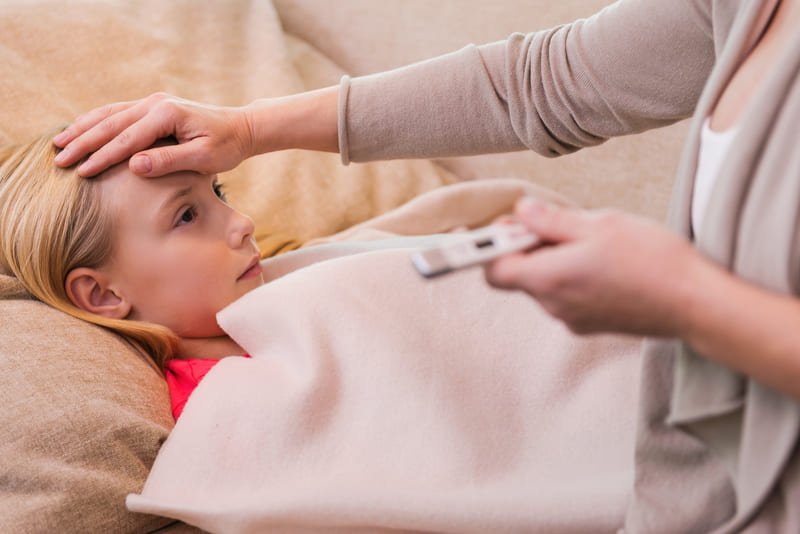
What Should You Do If Your Baby or Child Has a Fever?
- How do you correctly measure a fever in babies and children?
- Fever in Babies
- Fever in Older Children
- Types of Fever and Their Characteristics
- Treatments and Remedies for Fever in Infants and Children
- When should you see a doctor?
- Preventing Fever and Infections in Children
- Frequently Asked Questions (FAQ)
- Why Take Your Child for a Pediatric Checkup at Elytis Hospital
Fever is one of the most common symptoms in infants and children, and it’s a sign that the body is fighting an infection or other health issues. Although fever is not dangerous in most cases, it can be a cause for concern for parents, especially when it occurs in very young infants. It’s essential to understand the causes and characteristics of fever based on the child’s age in order to respond appropriately and in a timely manner. Read comprehensive and clear information about fever in infants and children, along with helpful advice for parents from the specialists at Elytis Hospital.
How do you correctly measure a fever in babies and children?
Accurate temperature measurement is the first step in identifying and monitoring a fever. There are several methods, each with its own advantages and limitations. For newborns and infants, rectal measurement is the most accurate and is recommended by pediatricians because it provides an exact reading of the internal temperature. For older children, an oral or underarm thermometer may be sufficient, although underarm measurement is less accurate.
The type of thermometer also matters. Digital thermometers are fast and reliable, while alcohol-based thermometers are used less frequently because they take longer to provide a reading. Ear thermometers and infrared thermometers are fast, but their results can vary depending on how they are used.
Table: Methods for Measuring Temperature and When They Are Recommended
| Method | Accuracy | Recommended age | Advantages | Disadvantages |
| Rectal | Very large | Newborns, infants | High precision | It can be uncomfortable, and there is a slight risk of injury if not done correctly |
| Axillary (under the arm) | Average | Older children | Easy to use, non-invasive | It may be less accurate and could underestimate the actual temperature |
| Oral | Sea | Children over 4–5 years old | Good accuracy | Requires the child's cooperation |
| Earpiece (ear) | Average | Children and Adults | Fast, comfortable | Position-sensitive |
| Infrared (forehead) | Average | All ages | Very fast, non-invasive | Less accurate under varying environmental conditions |
In general, a fever is defined as a temperature above 38°C when measured rectally or orally. Axillary temperatures may have a slightly lower threshold (37.5–37.8°C). It is important to measure the temperature correctly, repeating the measurement if necessary, to confirm the presence of a fever before taking any further action.
Fever in Babies
The severity of a fever and the methods for managing it vary significantly depending on the child's age.
Fever in Newborns (0–28 days)
In newborns, a fever is a major warning sign. Their immune systems are still immature, and a high temperature may indicate a severe infection that requires immediate treatment. Bacterial infections, such as sepsis or meningitis, are the most serious causes and must be investigated promptly.
Therefore, if a newborn has a fever above 38°C, it is recommended that the baby be seen by a doctor immediately, even if the baby’s overall condition seems good. Other causes of fever may include reactions to vaccines or local inflammation, but these are less common during this period.
For newborns, the safest method of taking a temperature is rectally, and the temperature should be monitored frequently. It is not recommended to give antipyretic medications without a doctor’s recommendation.
Fever in Babies Aged 1 to 3 Months
During this time, the risk of infection remains high, and a fever should be taken seriously. Most cases are caused by viral infections, but bacteria can also cause a severe fever. Signs to watch for include difficulty feeding, excessive irritability, drowsiness, difficulty breathing, or unusual crying.
Treating a fever at this age requires adequate hydration and prompt medical attention. Antipyretics should only be administered as directed by a doctor. It is essential to monitor for other associated symptoms in order to promptly identify any complications.
Fever in Babies Aged 3 to 12 Months
As the immune system develops, fever occurs more frequently due to minor causes, such as respiratory infections or viral rashes. However, fever can cause discomfort, irritability, and sleep disturbances.
Parents should monitor their child’s temperature and behavior. If the fever exceeds 39°C or lasts longer than 2–3 days, it is recommended to consult a doctor. Hydration, rest, and taking fever-reducing medications as directed are the main steps to take.
Fever in Older Children
For children older than 1 year, a fever is no longer considered a medical emergency except in certain situations. Here’s what you need to know about managing fever in this age group.
Fever in Children Aged 1 to 3
At this stage, children become more active, explore their surroundings, and come into frequent contact with other children, which increases the risk of viral and bacterial infections. Fever is often accompanied by symptoms such as a cough, a stuffy nose, a sore throat, or diarrhea. Children may become irritable, experience a loss of appetite, and have trouble sleeping.
At this age, a fever is generally a normal and healthy response by the body, indicating that it is fighting off an infection. However, it should be monitored closely. If the fever exceeds 39°C or the child experiences difficulty breathing, unusual drowsiness, dehydration, or seizures, a doctor should be consulted immediately.
To reduce a fever, antipyretics containing acetaminophen or ibuprofen are recommended, using the correct dose based on body weight. It is also important to stay properly hydrated and get plenty of rest.
Fever in Children Aged 3 to 6
At this age, children are more resilient and their immune systems are more mature, but fever can accompany a wide range of infections, from the common cold to viral infections or ear infections. Associated symptoms can vary, and fever may be accompanied by headaches, muscle aches, or general malaise.
Parents should pay close attention to their child’s behavior and monitor for fever and any associated symptoms. If the fever lasts more than 3 days, or if a rash, difficulty breathing, or severe pain develops, medical attention is necessary.
Treatments for fever include taking fever-reducing medications, rest, and staying hydrated. Dress your child appropriately to avoid overheating, and make sure the room is well-ventilated.
Fever in Children Over 6 Years of Age
Children over the age of 6 have an immune system that is nearly fully developed, so fever often results from common infections such as the flu, tonsillitis, or other respiratory infections. However, fever can also be a sign of more serious conditions, which is why a careful evaluation is important.
At this age, children are better able to describe their symptoms and cooperate when having their temperature taken or receiving treatment. Parents should watch for any signs of worsening symptoms: difficulty breathing, severe pain, a fever that does not subside after taking fever-reducing medication, or a change in overall condition.
Treatment continues to include fever-reducing medications, hydration, and rest. If the fever lasts longer than 3–4 days or is accompanied by other serious symptoms, it is advisable to see a doctor.
Types of Fever and Their Characteristics
A fever isn't always just a number on a thermometer; it can take different forms that indicate various medical conditions or stages of a disease. Here are the main types of fever seen in children:
- The fever persists: the temperature remains high without significant fluctuations, usually varying by less than 1°C throughout the day. This is common in severe bacterial infections, such as pneumonia.
- Intermittent fever: the temperature returns to normal or below normal, but recurs periodically. It is characteristic of malaria, but also of some viral infections.
- Remittent fever: the temperature fluctuates throughout the day but never returns to normal. This type is common in respiratory and viral infections.
- Recurrent fever: periods of fever alternating with periods without fever, which can last for days or weeks. It can occur in diseases such as brucellosis or certain chronic infections.
Table: Types of Fever and Their Clinical Indications
| Type of fever | Key Features | Possible causes |
| Continue | Constant high temperature, with no return to normal | Severe bacterial infections (pneumonia, sepsis) |
| Flashing | The fever comes and goes, with periods of normalcy | Malaria, certain viral infections |
| Sender | Large temperature fluctuations, with no return to normal | Viral infections, colds |
| Recurring | Episode of fever followed by a fever-free period | Chronic diseases, latent infections |
Depending on the type of fever, the doctor can determine the correct diagnosis and treatment.
Treatments and Remedies for Fever in Infants and Children
Fever is a symptom, not a disease in itself, and its treatment focuses on reducing the child’s discomfort and treating the underlying cause, if identified. For children, the proper administration of fever-reducing medications is essential.
Recommended antipyretic medications include acetaminophen and ibuprofen. Acetaminophen is often the first-choice medication for fever in children, as it is well tolerated and safe when dosed correctly. Ibuprofen is a good alternative, with both antipyretic and anti-inflammatory effects, but it is not recommended for children with digestive problems or kidney issues. Doses are calculated based on the child’s weight, and the interval between doses must be strictly observed.
Simple home remedies can support medical treatment: providing plenty of fluids to prevent dehydration, loose-fitting clothing, and well-ventilated rooms to keep the child from overheating. Lukewarm (not cold) baths can help lower the temperature, but it’s important to avoid the cold or cold drafts so as not to cause chills.
It is recommended that you avoid medications not approved by your doctor or unsafe natural remedies, as they may cause side effects or delay diagnosis.

When should you see a doctor?
Fever in children is a common reason for a pediatric visit, but some situations require prompt medical evaluation:
- For newborns and infants under 3 months of age: any fever above 38°C requires immediate medical attention, as the risk of severe infections is increased.
- Persistent fever: If the fever lasts more than 3 days without improvement, a visit to the doctor is recommended for further evaluation.
- Severe symptoms—such as difficulty breathing, febrile seizures, lethargy, severe refusal to eat, and dehydration (decreased urine output, dry mouth, drowsiness)—require emergency medical care.
- Skin rashes: The appearance of red spots, bruises, or other skin lesions, accompanied by a fever, should be examined by a doctor.
- Very high fever: over 40°C, which does not subside after taking antipyretics or which is accompanied by severe pain or a significantly impaired general condition.
In these situations, the doctor may recommend additional tests (blood tests, urine tests, X-rays) and may prescribe the appropriate treatment, including antibiotics if necessary.
At the Elytis Hospital Laboratory, your child can have tests done in a friendly environment, with experienced staff and state-of-the-art equipment.
Preventing Fever and Infections in Children
Preventing fever is directly linked to preventing the infections that cause it. The most effective measures include:
- Proper hygiene—frequent handwashing, good food safety practices, and maintaining a clean environment for the child—reduces the risk of infections.
- Vaccination: Following the national vaccination schedule is essential for preventing serious infectious diseases that can cause high fever.
- Healthy eating: a balanced diet and proper hydration support the immune system.
- Avoid contact with sick people: as much as possible, especially during the cold season or during outbreaks.
- Ventilating rooms and avoiding crowds can help reduce the spread of viruses.
These measures help keep children healthy and reduce the frequency of fever.
Fever in infants and children is a common symptom that indicates the immune system is responding to infections or other conditions. Depending on the child’s age, the approach to managing a fever varies, and parents need to be well-informed to take the right action in a timely manner. Accurately measuring temperature, monitoring associated symptoms, and seeking medical advice in critical situations are essential for the safety of young children. Prevention through hygiene, vaccination, and a healthy lifestyle remains the best way to reduce the frequency of fever. With attentive care and the right knowledge, fever can be managed effectively, providing the child with comfort and safety during recovery.
Frequently Asked Questions (FAQ)
Here are some of the most common questions parents ask about fever in babies, along with answers from the specialists at Elytis.
What temperature is too high for a baby?
Any rectal temperature above 38°C in newborns and young infants should be considered a cause for concern and requires medical attention.
Can I give my child a fever reducer as a preventive measure?
It is not recommended to give fever reducers when there is no fever, except in special cases and only as directed by a doctor.
How can I tell the difference between a fever and another problem?
A fever is a symptom. Look for other signs such as difficulty breathing, irritability, drowsiness, or a rash. If any of these are present, consult your doctor.
What should I do if my fever lasts longer than 3 days?
See your doctor for further testing, as a prolonged fever may indicate a more serious condition.
Is it normal to have a fever after getting a vaccine?
Yes, a mild fever may occur after vaccination; this is a normal reaction of the body. If the fever is high or persistent, consult your doctor.
What do febrile seizures indicate, and what should I do?
Febrile seizures are temporary episodes caused by a rapid rise in body temperature. If your child has a febrile seizure, call the emergency number immediately and follow the doctors’ instructions.
Can I use natural remedies for a fever?
Some remedies may help relieve symptoms, but they are not a substitute for medical treatment. Consult your doctor before using herbs or other natural treatments.
Why Take Your Child for a Pediatric Checkup at Elytis Hospital
Elytis Hospital is a modern medical center that offers high-quality pediatric services, including consultations and comprehensive diagnostic tests for children of all ages. A pediatric consultation at Elytis Hospital is an excellent choice because you’ll benefit from:
- A team of experienced pediatricians: The doctors at Elytis have extensive training and experience in diagnosing and treating conditions specific to childhood, offering personalized recommendations for each patient.
- Detailed and personalized assessment: Consultations are conducted with the utmost care, taking into account the child’s complete medical history, current symptoms, and individual characteristics.
- Modern facilities and advanced diagnostic tests: Elytis provides access to state-of-the-art medical technologies for laboratory tests, imaging, and other necessary diagnostic procedures, ensuring an accurate diagnosis.
- Flexible scheduling and family-friendly care: Appointments can be scheduled in advance, avoiding crowds and long wait times, in a child-friendly and safe environment.
- Educational support and counseling: Parents receive clear information and support for managing their child’s health, including advice on prevention, nutrition, and development.
- Collaboration with specialists in various fields: if necessary, the child can be referred to other specialties within the hospital for an integrated approach to health issues.
Elytis Hospital is an ideal choice for pediatric consultations, medical follow-ups, and detailed evaluations, ensuring quality care and attentive attention to your child’s health. Your child’s well-being is our priority. Make an appointment right now!
References:
- “Fever in Babies.” WebMD, www.webmd.com/parenting/baby/fever-in-babies, accessed August 1, 2025;
- "Fever in Infants and Children – Children’s Health Issues." MSD Manual Consumer Version, www.msdmanuals.com/home/children-s-health-issues/symptoms-in-infants-and-children/fever-in-infants-and-children, accessed August 1, 2025;
- Health Direct. “Fever and High Temperatures in Children.” Healthdirect.gov.au, Healthdirect Australia, May 27, 2019, www.healthdirect.gov.au/fever-and-high-temperature-in-children, accessed August 1, 2025;
- NHS website. “High Temperature (Fever) in Children.” Nhs.uk, Oct. 2017, www.nhs.uk/symptoms/fever-in-children/, accessed Aug. 1, 2025.
Last revised: October 25, 2025