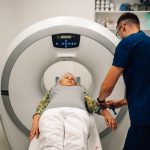
Radiology and medical imaging are an essential part of modern diagnosis, providing detailed information about the body’s internal structures. At Elytis Bacău, patients receive high-precision imaging interpretation and ultrasound services, which are essential for establishing an accurate diagnosis and monitoring various conditions.
Imagery Analysis
At Elytis Bacău, the radiology department focuses on interpreting previously performed imaging studies in order to provide an accurate and comprehensive diagnosis. The radiologist analyzes the images and provides findings relevant to subsequent medical management.
What is Radiology and Medical Imaging?
Radiology and medical imaging is the specialty that uses various types of tests to visualize the internal structures of the human body. Correct interpretation of these tests allows for the early detection of diseases and monitoring of their progression without invasive procedures.
The Role of the Radiologist
The radiologist's role is to interpret imaging studies and play a decisive role in establishing a medical diagnosis.
His responsibilities include:
- interpretation of CT and X-ray examinations;
- analysis of mammograms and bone densitometry;
- evaluation of ultrasound scans performed on various regions;
- identification of pathological changes;
- collaborating with clinicians to establish a diagnosis;
- recommendation for further investigations when necessary.
Services Available at Elytis Bacău
CT (Computed Tomography) Interpretation
CT interpretation allows for a detailed analysis of internal structures and is essential in diagnosing complex or acute conditions.
X-ray interpretation
X-rays are evaluated to identify changes in the bones, lungs, or other relevant anatomical structures.
Interpreting mammograms
Mammograms are interpreted to detect breast conditions at an early stage, including suspicious lesions or structural changes.
DEXA Interpretation
A DEXA scan is used to assess bone density and diagnose osteoporosis or other metabolic bone disorders.
Ultrasound abdomen and pelvis
Abdominal and pelvic ultrasound allows for the evaluation of internal organs such as the liver, kidneys, bladder, and pelvic organs; it is a noninvasive and rapid diagnostic test.
Breast Ultrasound
Breast ultrasound is used to evaluate breast tissue and supplement mammographic examinations, especially in selected cases.
Musculoskeletal ultrasound
This test allows for the evaluation of joints, tendons, and muscles, and is useful in cases of traumatic or inflammatory conditions.
Soft Tissue Ultrasound
Soft-tissue ultrasound is used to investigate subcutaneous masses, inflammation, or other tissue changes.
Ultrasound-guided puncture-biopsy
The procedure allows for the collection of tissue samples under image guidance and is essential for the accurate diagnosis of suspicious lesions.
Important Note
Elytis Bacău does not perform transfontanellar ultrasounds on children.
When is an imaging evaluation recommended?
Unclear clinical suspicions
Imaging tests are recommended when symptoms and a physical examination do not provide enough information to establish a definitive diagnosis. Methods such as ultrasound, X-rays, computed tomography (CT), or magnetic resonance imaging (MRI) provide a detailed view of internal structures and help identify the exact cause of the symptoms.
Monitoring Known Medical Conditions
Imaging evaluations are also important for monitoring the progression of already diagnosed diseases. By comparing test results over time, the doctor can assess the effectiveness of treatment, observe any changes in the condition, and adjust the treatment plan based on the patient’s progress.
Screening and Prevention
Certain imaging tests are used for preventive purposes, to detect certain conditions early, before symptoms appear. Examples include mammography for breast cancer screening and bone density testing to identify osteoporosis. Early diagnosis increases the chances of effective treatment and reduces the risk of complications.
Injuries or persistent pain
In cases of trauma, persistent pain, or limited joint function, imaging tests are essential for evaluating injuries. X-rays can reveal fractures and bone changes, ultrasound allows for the analysis of soft tissues, and CT or MRI scans provide detailed information about the deep structures involved. These tests help establish an accurate diagnosis and select the most appropriate treatment.
Related Medical Specialties
Internal medicine
Internal medicine frequently uses imaging tests for a comprehensive and holistic evaluation of the patient, especially in cases of chronic or multisystemic conditions. X-rays, abdominal ultrasounds, CT scans, and MRIs help identify cardiac, pulmonary, hepatic, or renal problems and provide an overall picture of a patient’s health, which is essential for establishing an accurate and comprehensive diagnosis.
Oncology
In oncology, medical imaging plays a central role in both the diagnosis and the staging and monitoring of cancer. Imaging tests such as CT, MRI, and PET-CT allow for the precise localization of tumors, the assessment of their extent, and the monitoring of response to treatment. Thus, imaging is essential for selecting the appropriate therapy and for evaluating its effectiveness over time.
Orthopedics and Traumatology
In orthopedics and traumatology, imaging studies are indispensable for diagnosing osteoarticular and muscular conditions. X-rays reveal bone changes, musculoskeletal ultrasound allows for the evaluation of tendons and soft tissues, and MRI provides details about the deep structures of the joints. These methods are essential for identifying traumatic, degenerative, or inflammatory lesions.
Gynecology
In gynecology, pelvic and breast ultrasounds are basic diagnostic tests used to assess the health of the female reproductive system. They are used to diagnose cysts, fibroids, inflammation, or other gynecological conditions, as well as to screen for changes in the breasts. Imaging allows for the early detection of problems and the monitoring of their progression over time.
Frequently Asked Questions About Radiology and Medical Imaging
What does it mean to interpret an imaging study?
Interpretation involves the analysis of medical images by a radiologist to establish a diagnosis.
Is a CT scan more accurate than an X-ray?
A CT scan provides more detailed information than an X-ray and is used in more complex or urgent cases.
Is an ultrasound safe?
Yes, an ultrasound is a safe test that does not use radiation.
Is a mammogram painful?
A mammogram may cause mild, temporary discomfort, but it is an essential test for the early detection of breast conditions.
Is a doctor's referral required for radiological and imaging tests?
In many cases, yes, a doctor's recommendation is necessary to choose the right test.
Cum pot beneficia de o consultație gratuită de Radiologie și imagistică medicală cu bilet de trimitere în Bacău?
Pentru a beneficia de o consultație gratuită de Radiologie și imagistică medicală la Elytis Bacău, aveți nevoie de un bilet de trimitere valabil de la medicul de familie sau de la un alt medic specialist, eliberat către specialitatea respectivă, alături de cardul de sănătate și un act de identitate. Programarea se face în limita fondurilor lunare decontate de Casa de Asigurări de Sănătate (CAS).
Ce servicii sau investigații sunt acoperite de biletul de trimitere la Radiologie și imagistică medicală?
Biletul de trimitere acoperă consultația de specialitate și, în funcție de patologie și decizia medicului, o serie de investigații paraclinice sau analize de laborator decontate direct prin CNAS. În cazul în care sunt necesare investigații suplimentare neacoperite de pachetul de bază, medicul vă va informa în prealabil cu privire la opțiunile disponibile.